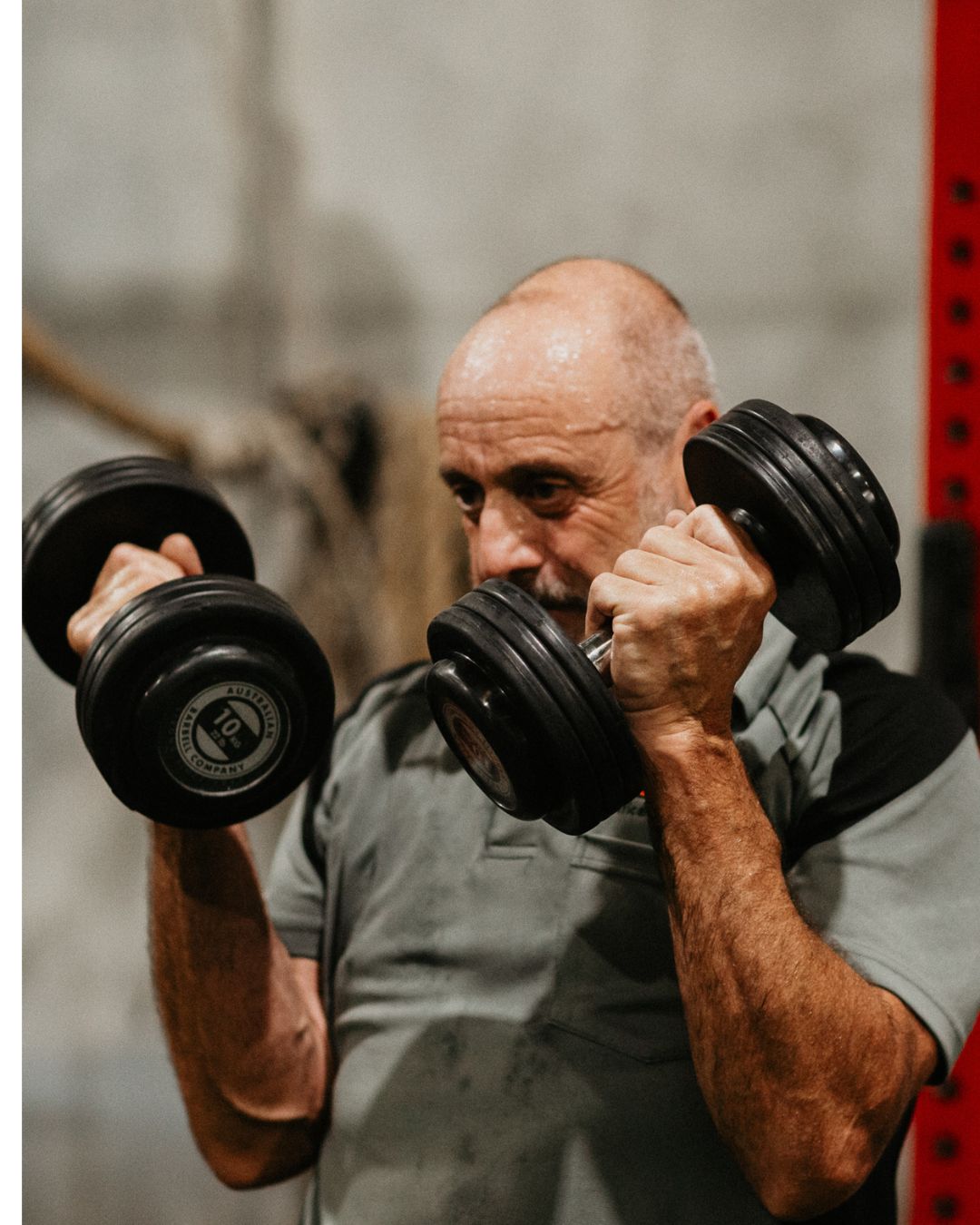
Why Strong People Age Differently
There’s something I find myself saying to people in the gym all the time: “You’re not struggling with that because you’re getting older.”
Now, obviously, we ARE all getting older. I certainly am. And getting older does change things. Recovery isn't quite the same. Maintaining muscle and strength becomes more important. There are definitely mornings when getting out of bed provides a slightly more comprehensive physical assessment than it used to.
But I worry that “I’m getting older” has become the explanation for almost everything.
Running feels a little uncomfortable? “I’m getting too old to run.” Shoulder feels sore after pressing? “I probably shouldn’t lift overhead anymore.” Squatting doesn't feel quite right? “My knees aren't what they used to be.”
And sometimes there genuinely is something going on. If a movement that you've always been able to do suddenly hurts, or you're dealing with persistent soreness, then get it checked out. Find out what the problem is. Get some advice. Rehab it. Modify your training while you need to. What I don't love is immediately deciding that the solution is simply to never do that thing again.
Because stopping isn't neutral.
Let's say you've been running regularly for years. Nothing crazy. A few kilometres here and there as part of your normal training. Then it starts feeling a little harder. Maybe your knee gets sore. Maybe your calves tighten up. Maybe you just don't enjoy it as much as you used to. So you decide: “No more running.”
Six months later you have to run for some reason. Maybe there's a short run programmed in a workout. Maybe you're mucking around with the kids. Maybe you're just trying to get across the road before the lights change. And it feels TERRIBLE. Your legs feel heavy. Your feet don't particularly appreciate it. Your breathing is everywhere. The movement itself feels awkward.
And there's your proof. “See. I knew I was too old to run.”
Except you're not comparing yourself with the person who was running six months ago. You're comparing yourself with someone who hasn't run for six months. Of course it feels harder. For six months you haven't asked your feet, calves, knees, hips, heart, lungs or nervous system to deal with the demands of running. You've effectively been training yourself NOT to run.
It's a little like deciding you don't eat bread because “GLUTEN” despite having no diagnosed problem with it. Avoid something for long enough and that first uncomfortable experience when you reintroduce it can become all the evidence you need that you were right to avoid it in the first place.
Movement can work the same way. “I don't jump anymore.” “I don't get down on the floor.” “I don't lift overhead.” “I don't squat that low.” “I don't do burpees.” “I don't run.” Every one of those statements might have a completely legitimate reason behind it, but they can also become permanent decisions made because something was temporarily uncomfortable.
And that's a problem, because what we really want as we get older is to keep doing EVERYTHING for as long as we possibly can.
Maybe the version changes. Maybe you don't run as fast as you did when you were 25. Maybe you don't jump as high. Maybe you need a little longer to warm up before you squat. Maybe you lift overhead twice per week instead of four times. Maybe you need to manage your total training volume a little more carefully. That's fine.
Modification isn't retirement.
At 54, I'm not trying to pretend I'm 25. There are things I approach differently now. There are certainly things that hurt more than they used to. And when something isn't right, I want to know WHY. What I don't want to do is voluntarily start crossing movements off the list simply because of my age.
I want to run. Jump. Lift. Squat. Carry heavy things. Get down on the ground and get back up again. Train hard. I want to keep all of those things available to me for as long as possible.
And this is where I think strength becomes incredibly important. Strength gives you margin. If getting yourself off the floor requires 30% of the strength you have available, getting off the floor is easy. If it requires 80%, it's a significant physical task. Same floor. Same movement. Completely different experience.
That applies to carrying the shopping. Putting a suitcase into an overhead locker. Picking up a grandchild. Climbing stairs. Moving furniture. Walking up a hill. Catching yourself when you stumble.
Strength doesn't make you younger. It makes more of life stay easy for longer.
And I think people who keep training often develop another advantage as well. When something becomes difficult, their first response isn't necessarily: “Well, I guess I can't do that anymore.” It's: “Why?”
Is something injured? Do I need to get it looked at? Have I stopped practising it? Am I weaker than I was? Is there something we can change? Can we build it back up?
That's a very different relationship with ageing. Because getting older is inevitable. Gradually surrendering every physical capability you have isn't.
There will obviously be things outside our control. Injury happens. Illness happens. Bodies change. None of us gets to negotiate our way out of biological ageing. But that doesn't mean we should help it along.
Don't voluntarily retire from movements you still have the ability to do. If you need to modify something, modify it. If something hurts, find out why. If you've lost some strength, build it back. If you've stopped doing something for a while, don't be surprised when it feels difficult when you start again.
Most importantly, don't use your birthday as the diagnosis.
I don't particularly care about being the strongest 54-year-old. And when I'm 64, I won't particularly care about being the strongest 64-year-old either. What I care about is arriving there with as much capability still available to me as possible.
Because perhaps strong people don't age differently because they've somehow beaten ageing. Maybe they age differently because they keep giving their bodies reasons to remain capable.
Keep doing things. For as long as you possibly can.