Training Under Pressure: Keeping Form When Tired
I woke up on Sunday morning and could barely touch my knees. Forget touching my toes. My toes may as well have been in another postcode.
Friday had been pretty normal. Work pretty much all day, although I stopped to do a Boxing class at midday. I got home around 5:30pm, tinkered around the house for a while and then headed out for about a 45-minute walk. Dinner. Couch. Bed.
Saturday was a little different. Funky Fit at 6am. It was pretty tough. We then followed that up with another 30-minutes of Rolling Thunder in the Boxing gym because, well…I never said I was SMART.
Home. Breakfast. Then down to Rockingham to sail the new boat. No, it's not mine. Apparently my role is primarily "ballast", which feels like it should be at least a little insulting but is a reasonably accurate description of my contribution - be 90kg and get to the back of the boat. Home around 4:30pm. I think I probably contributed in some small way to getting dinner organised, although let's not rewrite history here. Then I was in bed around 9pm.
Sunday morning? I was a mess.
Everything was stiff. My hamstrings felt approximately three inches long. My lower back didn't particularly want to bend. Getting my socks on was more of an event than it should have been.
And here's the important bit.
I still wanted to train.
Being stiff didn't mean I couldn't train. It didn't mean there was something wrong with my back. It didn't mean I suddenly needed to put every exercise involving my hips or lower back onto the banned list.
But it DID mean I had to pay attention.
Because when you're stiff like that, your body becomes very good at finding another way.
If bending properly feels difficult, you reach.
If getting your hips involved takes some effort, you use your back.
If setting yourself before picking something up feels like a hassle, you just lean over and grab it.
And because you're already tired and stiff, those shortcuts can actually feel completely reasonable in the moment.
So on Sunday, the challenge wasn't simply getting through a workout. The challenge was making sure I continued to move properly while I did it.
I needed to warm up. I needed to gradually get some range back. I needed to actually hinge rather than just folding myself towards the floor. I needed to brace before lifting something rather than assuming my body would sort it out.
Most importantly, I needed to notice what I was doing.
And THAT got
"My lower back is sore."
"My back always hurts after kettlebell swings."
"Deadlifts hurt my back."
"I can't do that because of my back."
Now,
But I do think there's another question we don't ask ourselves often enough.
How well are you moving when you're tired?
Because Sunday morning gave me a pretty good reminder of how easy it is NOT to.
And you don't have to spend Saturday morning doing Funky Fit and Rolling Thunder before spending half the day as ballast on a boat to experience it.
We deliberately make you tired in the gym. That's training.
Then you get tired.
And just like me trying to reach the floor on Sunday morning, your body starts looking for an easier way. The hinge becomes a bend. The brace disappears. Instead of driving through the hips, you start hauling the weight around. Instead of setting yourself before picking something up from the floor, you reach down and grab it. The movement that started with your legs, hips and trunk working together slowly becomes your lower back trying to get everything done by itself. Then the session finishes and it's:
"My lower back is killing me."
Well…Maybe. And maybe we need to have a closer look at what happened to the exercise once you got tired.
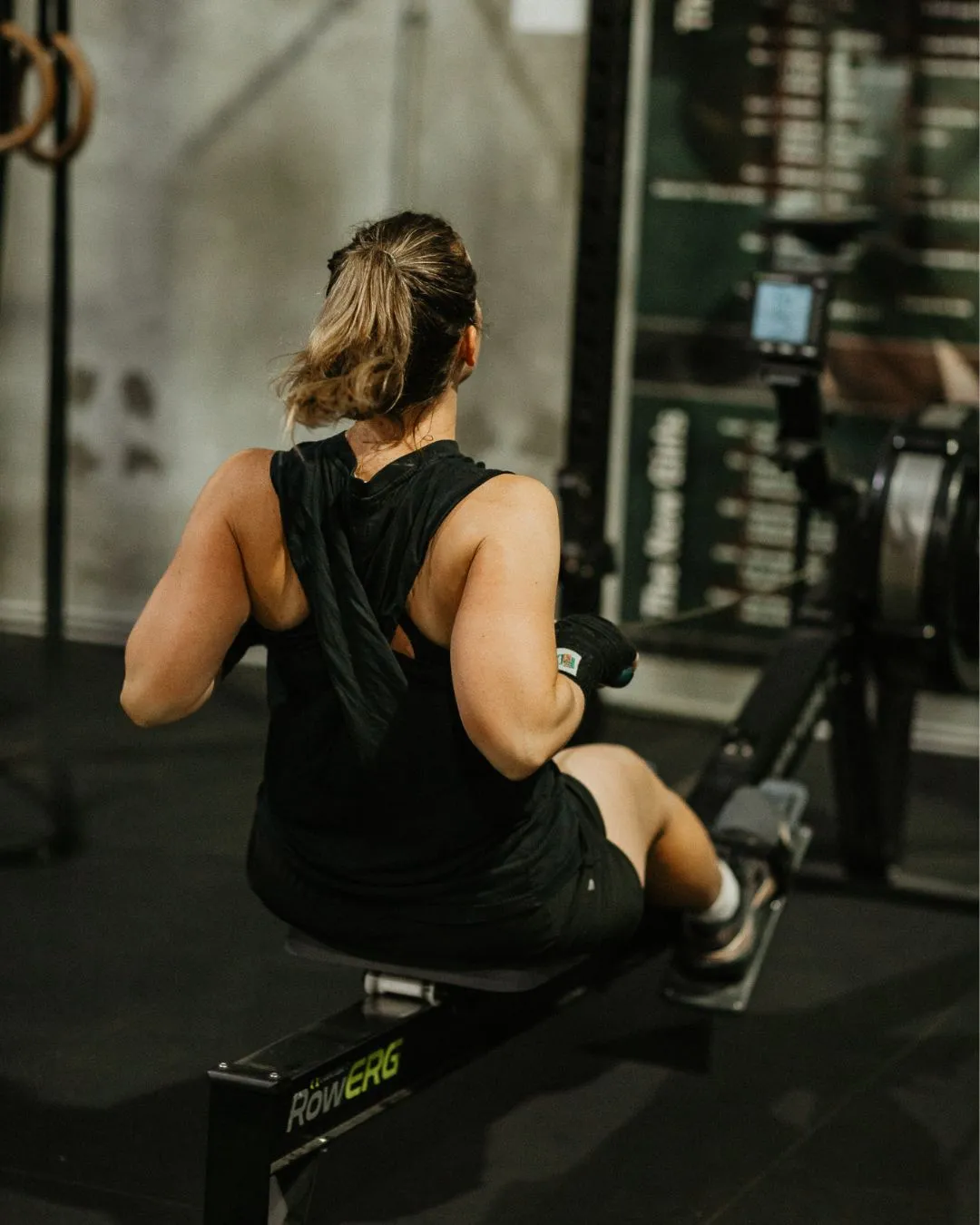
And this isn't just about kettlebell swings or deadlifts. Watch what happens during almost any workout as fatigue builds. Squats get shallower. Push-ups start sagging through the middle. Rows become increasingly upright. Running posture changes. Punches become arm punches. Footwork disappears. People start reaching, twisting and grabbing weights from the floor without setting themselves because stopping for three seconds somehow feels like cheating. The objective quietly changes from do the movement well to just get through it.
That's where I think we get things wrong.
Being tired doesn't mean technique suddenly stops mattering. If anything, that's when it matters MORE. And maintaining good movement when you're tired is actually a skill worth developing.
That doesn't mean every rep needs to look like it belongs in an exercise textbook. Movement changes under fatigue. Of course it does. It also doesn't mean you should stubbornly keep doing exactly the same thing when your body is telling you otherwise.
Sometimes maintaining good movement means slowing down. Sometimes it means taking five seconds before starting your next set. Sometimes it means doing six good reps rather than ten increasingly ordinary ones. Sometimes it means dropping the weight. Sometimes it simply means putting the kettlebell down, standing up, taking a breath and then setting yourself properly again.
None of those things mean you're working less hard.
In fact, I think one of the harder skills to learn in training is refusing to let fatigue dictate HOW you move. Because there's a strange mentality that can creep into group training. Faster must be better. More reps must be better. Heavier must be better. Stopping must be bad. And if the person beside you is still moving, you'd better keep moving too.
But making an exercise uglier isn't the same thing as making it harder.
If the target is your legs and your legs are exhausted, finding a way to shift the load into your lower back isn't some heroic demonstration of toughness.
You've just changed the exercise.
And if you do that repeatedly, week after week, you shouldn't necessarily be surprised when your lower back starts complaining about all the extra work you've been giving it.
That's what Sunday reminded me.
I wasn't injured. I was tired and stiff. And being tired and stiff changed the way my body WANTED to move.
My job was not to let it. That's really what training under pressure means.
It's easy enough to hinge properly when you're fresh. It's easy to brace when your heart rate is sitting at 80. It's easy to throw technically good punches during the first minute of a Boxing class.
The useful skill is being able to keep doing those things when you're tired. When your heart rate is up. When your legs are cooked. When your grip is going. When you're halfway through the final round and you'd really rather just get the bloody thing finished. That's when you need to keep thinking.
Because every rep is practice.
The beautiful reps at the start of the workout are practice. But so are the ugly ones at the end. If every time you get tired your movement falls apart, you're getting a lot of practice at moving badly when you're tired.
I'd much rather you practise staying composed. Resetting. Bracing. Moving properly. Knowing when to slow down. Knowing when to reduce the load. And knowing the difference between the discomfort of working hard and a movement that simply doesn't feel right anymore.
That's the easy bit. The goal is to build a body that can continue to move well when things get difficult. And maintaining your movement when you're tired isn't something that gets in the way of the workout.
It IS part of the workout.