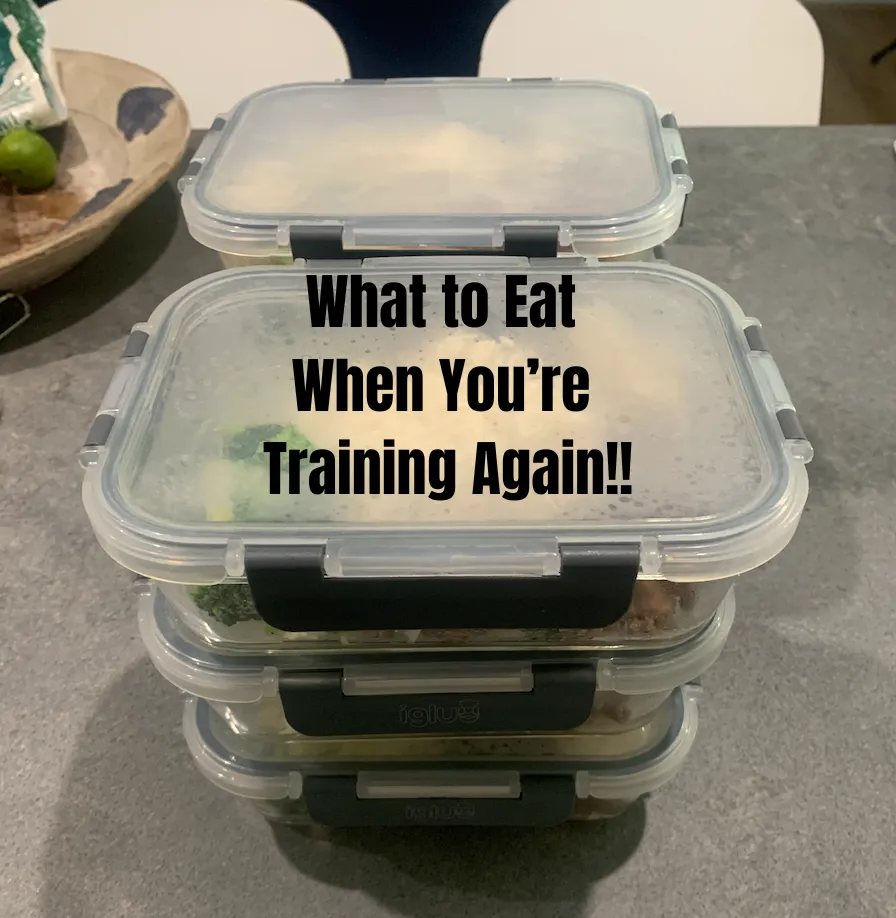
What to Eat when you're Back Training Again
Before We Talk About Food…
Over the past few weeks, the focus hasn’t been on transformation, motivation, or doing everything at once.
It’s been about re-starting.
We talked about:
January as a re-entry month
Training three times per week as the sweet spot
Putting structure around your week so training has a place to live
If you’ve done that — even imperfectly — that’s a big win.
You’ve re-established the habit.
And that matters, because the biggest mistake people make at this point is trying to change everything at once.
One habit at a time.
Training habit → tick
Consistency → building
Structure → in place
Now — and only now — does it make sense to think about food.
Not because your body needs to “tighten up”
Not because the scale needs to move immediately
But because training creates a demand, and food is what supports it.
This next step isn’t about perfection or restriction.
It’s about making sure your body has enough fuel to:
Train well
Recover properly
Stay consistent without feeling exhausted or stressed
So think of this as support, not another rule.
With that in mind, let’s talk about some simple, practical guidelines for what to eat when you’re training again.
The Two Big Guidelines (Starting Point Only)
These are general, sensible ranges — not hard rules:
Protein: 1.4–1.7g per kg of bodyweight per day
Calories: 25–30 calories per kg of bodyweight per day
We adjust these up or down based on goals, training load, stress, sleep, and body composition — but for most people returning to training, these are a very solid place to start.
Breakfast: Simple, Repeatable, High-Protein
Great option:
Greek yoghurt: 200–400g
Protein powder: 1 scoop
Mixed berries: 1 cup
What that roughly looks like:
Option A – 200g yoghurt
Calories: ~350 kcal
Protein: ~40–45g
Option B – 400g yoghurt
Calories: ~450–500 kcal
Protein: ~55–65g
This is an easy win:
High protein
Low effort
Fast prep
And yes — it absolutely counts as a proper breakfast.
Lunch & Dinner: Keep It Boring (In a Good Way)
Consistency beats creativity here.
Simple template (per meal)
For women:
120g beef / chicken / fish / tofu
75g carbs (rice, pasta, potato, wraps, etc.)
100g greens or veg
Rough nutrition per meal:
Calories: ~450–500 kcal
Protein: ~25–30g
You don’t need variety at every meal.
You need meals you can repeat without thinking.
Why 3 Meals Often Isn’t Enough
If you’re training 3x per week or more, living a busy life, and trying to feel human again — three meals is often not enough.
For many people:
4 meals per day is what’s required just to hit basic protein and calorie needs
That might look like:
Breakfast
Lunch
Dinner
Plus a snack or small meal (shake, yoghurt, sandwich, leftovers)
This part matters:
Eating more to fuel training does NOT automatically mean weight gain.
What it usually means:
Better sessions
Less fatigue
Better recovery
Lower stress
Fewer late-day cravings
Under-fueling is one of the fastest ways to:
Feel flat
Get frustrated
Lose momentum
The Big Picture
These are guidelines, not a test you can fail.
You don’t need:
Perfect macros
Exact grams
Food tracking forever
You need:
Enough protein
Enough total food
A structure that supports your training
Train first.
Fuel to support it.
Adjust later.
What next??
If you’re unsure whether you’re eating enough to support your training, or you feel flat, tired, or stuck despite showing up — let’s look at it together.
Book a quick consult and we’ll:
Sense-check your food against your training
Adjust portions (not overhaul your life)
Make sure your fuel actually matches the work you’re doing
No judgement.
No extremes.
Just practical tweaks that make training feel better.