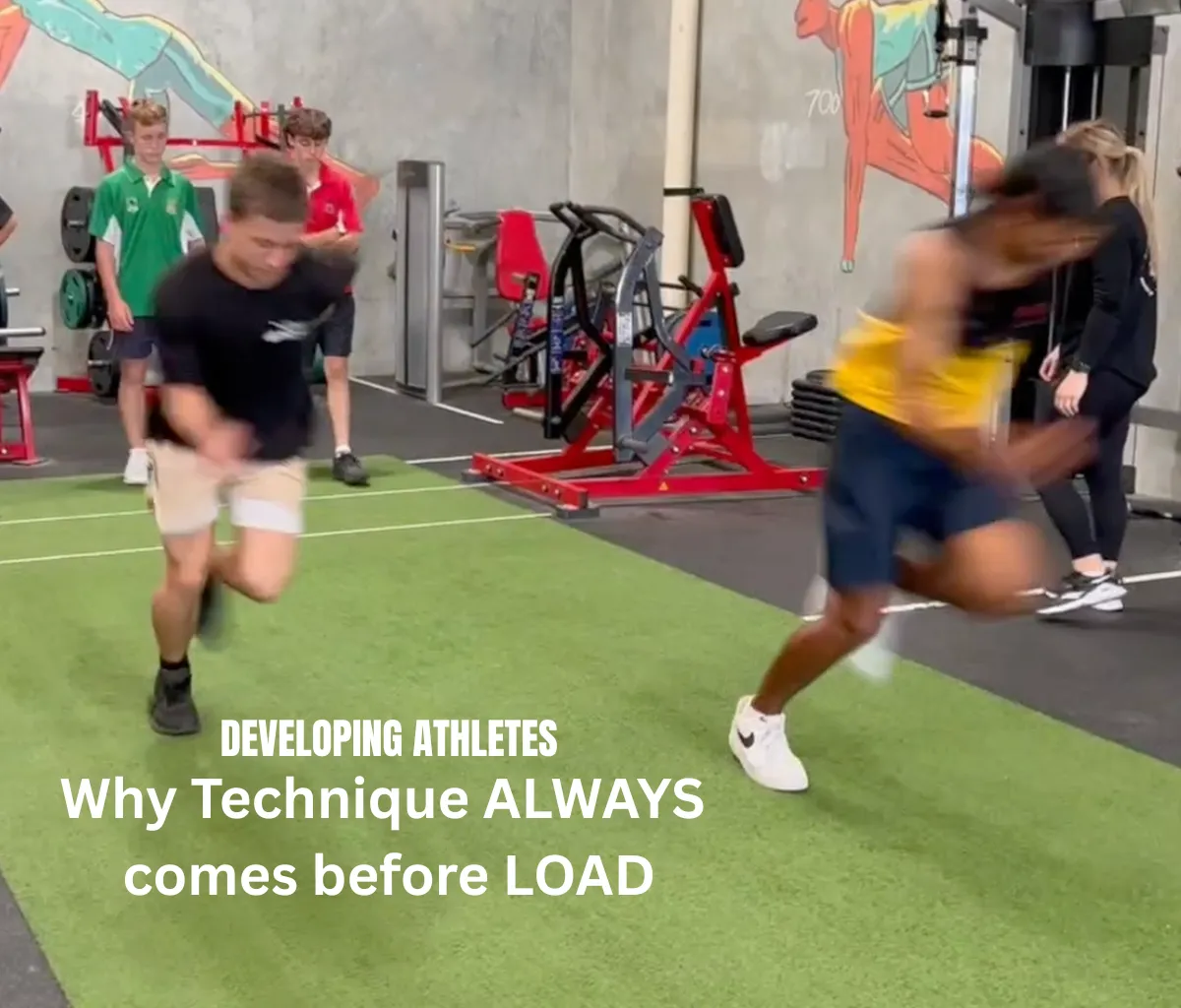
Developing Athletes: Why Technique Always Comes Before Load
Why Technique Always Comes Before Load
One of the most common questions we hear from young athletes is simple:
“How much weight should I be lifting?”
The honest answer is:
Probably LESS than you think — until you can move it properly.
In developing athletes, strength training isn’t about how heavy the bar is.
It’s about how well the body can organise itself under stress.
Strength is a skill first — not a test
Before load ever becomes useful, an athlete needs:
Control
Balance
Timing
Body awareness
Repeatable movement patterns
Without those things, adding weight doesn’t build strength — it magnifies errors.
Poor squat mechanics don’t disappear when the bar gets heavier.
Soft knees don’t magically stiffen.
A collapsing trunk doesn’t suddenly become stable.
Load just makes the problem louder.
What good technique actually gives young athletes
When technique comes first, athletes gain:
Force transfer – power moves through the body efficiently
Joint resilience – knees, hips, shoulders learn to share load
Consistency – the same movement every rep, every session
Confidence – knowing how to move, not just trying to survive the lift
That confidence matters. Athletes who trust their movement:
Push harder
Learn faster
Get injured less
Progress longer
Why we don’t rush load in developing athletes
Young athletes are:
Growing
Changing limb lengths
Developing coordination
Learning new movement patterns under fatigue
That’s not weakness — it’s development.
Loading poor movement during this phase often leads to:
Overuse injuries
Plateaus disguised as “strength”
Athletes who look strong but can’t move well
Big lifts that don’t transfer to sport
We’d rather build:
A rock-solid squat with moderate load
thanA messy squat with impressive numbers and fragile joints
Technique first doesn’t mean “easy”
This is the part most people miss.
Focusing on technique doesn’t make training soft — it often makes it harder:
Slower tempos
Pauses
Isometrics
Controlled ranges
Fatigue without chaos
The athlete still works.
They still sweat.
They still struggle.
They just struggle in ways that actually make them better.
The long game: why this matters later
Athletes who master technique early:
Lift heavier later
Absorb contact better
Move more efficiently under fatigue
Stay on the field longer
Strength built on good movement stacks.
Strength built on shortcuts eventually collapses.
That’s why in the Developing Athlete Program:
Load is earned, not rushed
Technique is coached, not assumed
Movement quality always comes before ego
Final thought for parents and athletes
If your athlete feels like they’re “lifting lighter than others” right now — good.
That usually means:
They’re learning
They’re building foundations
They’re being coached properly
And foundations are what allow real strength to show up later — when it actually matters.
Ready to train the right way?
If you’re a parent of a young athlete — or an athlete yourself — and you want:
Strength built on good movement, not shortcuts
Training that matches where the body is at right now, not adult programs
A plan that develops speed, strength, coordination, and resilience over the long term
Our Developing Athlete Program is built exactly for that.
We start with movement.
We coach technique.
We progress load when it’s earned.
👉 Book a free Developing Athlete consult (https://round1fitness.com.au/free-consultation) and let’s talk through where your athlete is at, what they’re playing, and how to build strength that actually transfers to sport.
This is about setting them up not just for this season — but for the next five years.