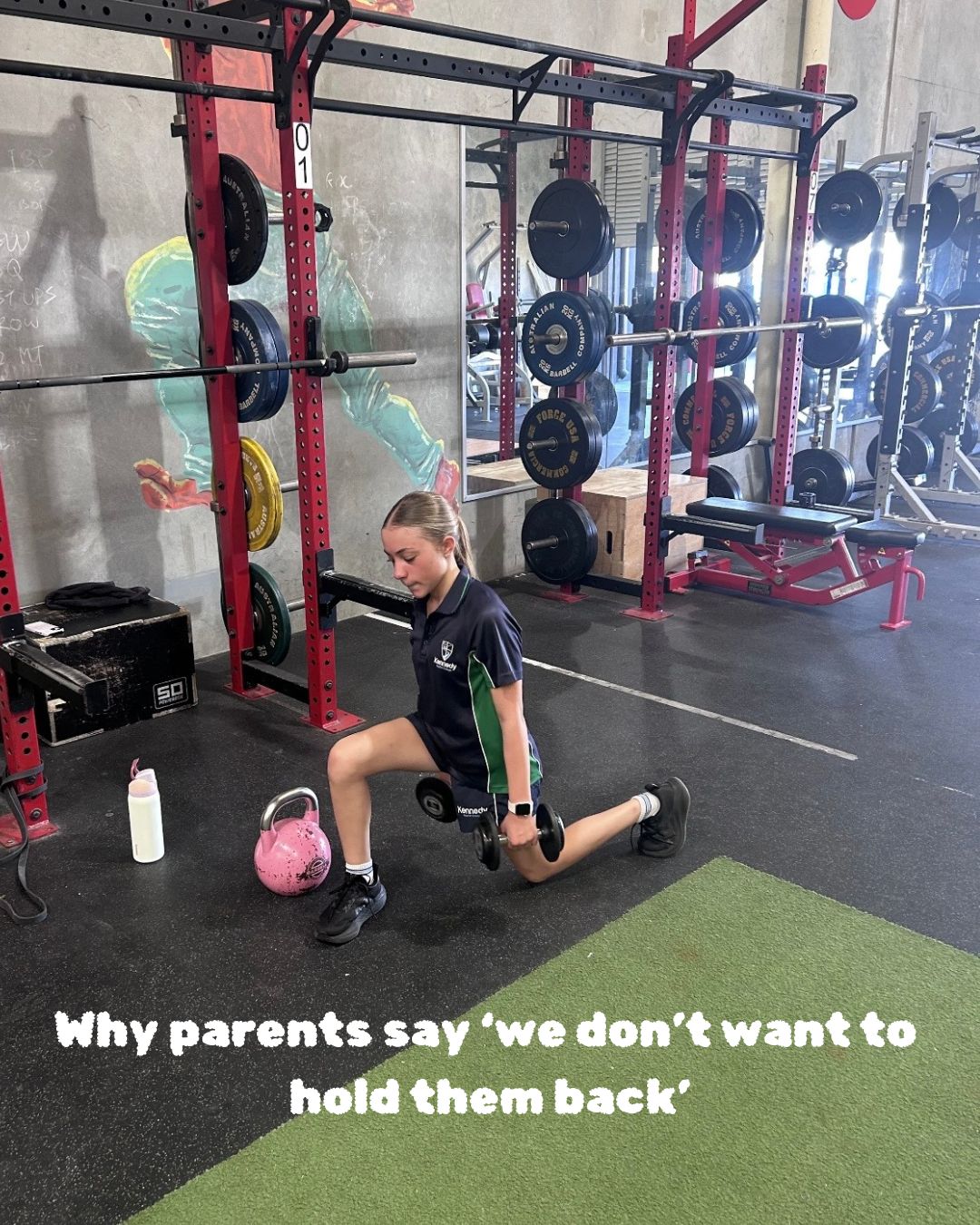
Developing Athletes: Why Parents Say “We Don’t Want to Hold Them Back”
I’ve heard it a hundred times.
And if I’m honest… I’ve said it myself.
I’ve had three kids come through talent pathways in three different sports. I know exactly what it feels like when an opportunity pops up.
An extra squad.
A development program.
An invitation-only session.
And the first thought is:
“We don’t want to hold them back.”
That sentence doesn’t come from ego.
It comes from love.
The Fear Behind the Words
What if saying no means they miss their chance?
What if "everyone else" says yes?
What if this is the step that matters?
You don’t want to be the parent who stood in the way.
I get that.
But here’s what experience has taught me — as a coach and as a dad.
Sometimes the thing that looks like progress… isn’t progress at all.
More Sessions ≠ More Development
When development squads kick off, it’s common to see training jump from:
2x club sessions
to2x club + 2x development sessions
It sounds amazing. Better coaching. Better players. Better competition.
But here’s the question I always ask:
What physical qualities are actually being built?
Because most sport training focuses on:
Tactics
Skills
Game scenarios
Fitness through drills
Very little time is spent on:
Sprint mechanics
Deceleration control
Change of direction technique
Foundational strength
Tendon resilience
Movement quality
So kids end up doing more of the same — just at higher intensity.
That’s not holding them back.
That’s building load without building capacity.
What I Learned as a Dad
I learned that saying “not yet” is sometimes the braver call.
Not no.
Not never.
Just — not without a base.
The athletes who last aren’t the ones who did the most at 14. They’re the ones who built strength, robustness and movement skill early… and then layered volume on top.
You don’t hold an athlete back by protecting their foundation. You hold them back by skipping it.
What We Actually Do in Developing Athletes
Our sessions aren’t about replacing sport. They’re about supporting it.
We focus on:
Acceleration and braking
Clean change of direction
Strength fundamentals
Isometrics for tendon health
Teaching them how to move well before we load them
Two sessions a week in the gym alongside their sport can often do more for long-term development than four nights of game-based training.
It’s not about doing less.
It’s about doing what’s missing.
A Friendly Reminder to Parents
If you’re sitting there thinking:
“I just don’t want to hold them back…”
That tells me you care.
Now the better question is:
What will help them still be improving in three or four years?
Because long-term development always beats short-term exposure.
What's next???
If you’d like to sit down and talk through your child’s current training load — and where strength and movement training fits — let’s have a conversation.
No pressure. No hard sell.
Just clarity around what supports their sport… and what might quietly be increasing risk.