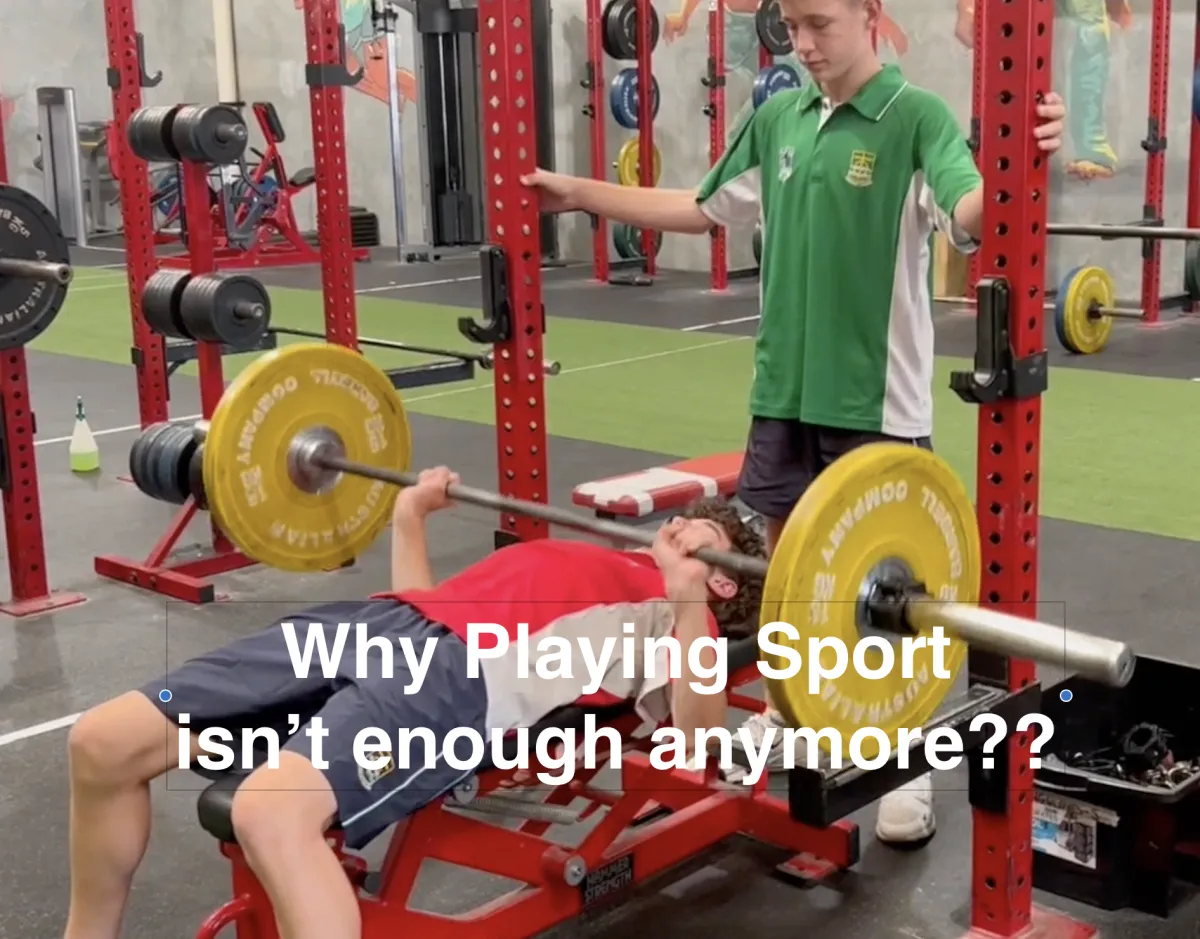
December 29th: Why Playing More Sport Isn’t Enough Anymore
Why Playing More Sport Isn’t Enough Anymore
Over the break, like a lot of people, I found myself watching the Ashes (well, what of it there was!) and, me being me, I ended up thinking about something beyond the scoreboard.
There are only 11 players who get to wear that baggy green cap. How exactly did they get there? It wasn't by accident - and it definitely didn't happen because those 11 just “played more cricket” under the old 10000 hour theory. It just isn't that simple.
My time working in the AFL talent pathway has taught me that reaching the top level of any sport is rarely simple or smooth. It’s years of development, setbacks, physical preparation, missed selections, rebuilding, and learning how to handle increasing demands on the body.
Talent matters (I mean, of course!) — but it’s never the whole story.
And that same reality applies much earlier than most people realise.
There’s a belief that still hangs around junior sport:
“If kids are playing enough sport, they’ll be fine.”
Ten or fifteen years ago, that was mostly true. Twenty five years ago it was completely true.
Today?
It’s no longer enough — and in many cases, it’s the reason young athletes are breaking down earlier than ever.
Sport Used to Build the Athlete
Not that long ago, sport did the work.
Teenagers:
Walked and rode bikes everywhere
Played multiple sports across the year
Spent less time sitting
Had more unstructured movement
Training sessions were tough, but they sat on top of a big base of general movement and physical resilience.
Sport built the athlete.
Now Sport Just Exposes the Gaps
Fast forward to today’s teenager.
Even highly talented kids:
Sit for most of the school day
Sit again at home
Play one dominant sport year-round
Train hard, but move very little outside sessions
So when they hit training or game day, sport isn’t building them anymore. And as the level of competition rises and they are put under more and more pressure? Well - that's when what's missing is revealed.
Why We’re Seeing More Injuries, Earlier
This is the part parents and athletes often struggle with.
Hamstrings. Backs. Knees. Hips. Ankles.
Growth-related pain that never settles.
“Overuse” injuries in 14–17 year olds.
This isn’t bad luck.
It’s what happens when:
Speed improves faster than strength.
Skill improves faster than tissue capacity.
Training loads increase without a physical base
Athletes are asked to repeat high outputs without recovery capacity.
Sport demands keep rising — but the physical foundation underneath hasn’t kept up.
Talent Isn’t the Issue
This is important.
Most of the kids we work with are:
Talented.
Motivated.
Coachable.
Already training hard.
Their problem isn’t effort.
Their problem is that sport training assumes qualities that haven’t been built yet.
Sport selects athletes.
It doesn’t systematically develop:
Strength.
Robustness.
Braking (Deceleration!) and landing ability.
Trunk and hip control.
Repeated high-output capacity.
That work has to happen alongside sport, not instead of it.
Why “Just Play More” Backfires
When kids struggle, the default advice is often:
“They just need more training.”
But piling more sport on top of gaps doesn’t fill them — it widens them.
You don’t fix:
Soft-tissue injuries with more running.
Poor movement with more skill drills.
Fatigue issues with more games.
You fix them by building the athlete underneath the sport.
What the Developing Athlete Program Is Really About
This is exactly why the Developing Athlete Program exists.
Not to replace sport.
Not to compete with clubs.
Not to push kids into “gym junkies”.
But to:
Build strength that sport relies on but doesn’t train.
Improve movement quality before intensity rises again.
Create physical confidence, not just skill confidence.
Support long seasons, growth spurts and multiple teams.
Teach kids how to train — not just how to play.
We’re not trying to make kids train harder.
We’re trying to make sure their bodies can keep up with their ambition.
The Big Picture
Sport is still essential.
It just can’t do everything anymore.
The athletes who:
Stay on the park
Improve year to year
Handle higher levels of competition
Avoid the injury–restart–injury cycle
Aren’t lucky.
They’re prepared.
Watching elite sport, it’s easy to forget how long the road actually is. Those players on the biggest stages didn’t just survive talent identification — they survived years of increasing physical demand because their bodies were built to handle it. For today’s young athletes, the goal isn’t to rush that journey or load more onto them too early. It’s to give them the foundation that lets talent show up, season after season. When we get that right, sport stays challenging, rewarding, and enjoyable — not something the body keeps pushing back against.
If you’re a parent or athlete wondering whether your current training is actually supporting long-term development — not just this season — the best place to start is a conversation. We offer a free consultation to look at sport demands, injury history, growth stage and training balance, and help map out a smarter path forward.
👉 Book a free Developing Athlete consultation here:
https://round1fitness.com.au/free-consultation/