The 'Secret' to Boxing Fitness Isn't Really a Secret
I came across an ad the other day that told a pretty incredible story.
A 46-year-old bloke is sitting in a doctor's waiting room having injured his knee trying to start running again. He's got a desk job, he's carrying a bit of extra weight and despite trying gyms, treadmills and diets, he hasn't been able to get rid of his gut. Sitting next to him is an older bloke, late 60s, who is remarkably lean and looks like he's in great shape.
They get talking and — because this is a fitness advertisement — the older bloke isn't an accountant or a retired schoolteacher. He's a boxing trainer. Forty years in the game.
Our hero naturally asks him how he's managed to stay in such great shape, which is when the boxing trainer reveals something apparently hidden from the rest of us for the past century: fighters don't get lean from doing hours and hours of cardio. They get lean from short periods of incredibly hard work. Get your heart rate up, keep it there, recover and go again. Ten or fifteen minutes is apparently all you need.
Better still, the reason none of us know this is because the fitness industry doesn't want us to know. There's no money in telling people to exercise hard for ten minutes, so we've all been conned into buying gym memberships and using treadmills and exercise machines instead.
Of course, at this point the old boxing trainer reaches into his gym bag and pulls out a couple of small exercise devices that apparently all of his fighters now use. Our hero orders a pair from his phone while still sitting in the waiting room and, 14 weeks later, he's moved his belt four notches, his wife has noticed the transformation and people at work are asking him what he's been doing.
As luck would have it, these remarkable devices are also currently 50% off and available only in limited quantities.
It's an absolutely ridiculous advertisement.
But I kept reading it because, underneath all of the nonsense, there was an idea that I actually found pretty interesting.
Boxing is a very effective way of getting people to work incredibly hard in relatively short periods of time. Boxing trainers really have understood that for a very long time. Where the advertisement goes off the rails is pretending that this is some secret fat-loss mechanism that makes everything else irrelevant.
For starters, the idea that fighters traditionally got lean without doing much cardio would come as quite a surprise to generations of fighters who spent an enormous amount of time doing roadwork. Running, skipping, bag work, pad work and sparring have all been part of boxing training forever. Fighters didn't choose between long aerobic work and short intense rounds. They did both.
Nor is there anything magical about getting your heart rate to 140 beats per minute. Your body doesn't suddenly receive a message that it's time to start removing abdominal fat because you've crossed a particular number on your watch. If reducing body fat is the goal, what you eat and your overall energy balance still matter enormously. You can't turn ten minutes of hard exercise into a physiological loophole that allows us to ignore everything else.
But forget about fat loss for a moment, because I think that's where the more interesting conversation about boxing starts.
One of the hardest things about exercise isn't necessarily getting people to work hard. It's getting them to work hard consistently.
Anyone can destroy themselves for ten minutes. We could create a workout tomorrow morning that would leave virtually every member of the gym lying on the floor wondering what had just happened. That doesn't necessarily make it a particularly useful workout, and it certainly doesn't mean they'll be excited about coming back and doing it again on Wednesday.
Boxing approaches intensity a little differently because the work has a purpose beyond simply making you tired.
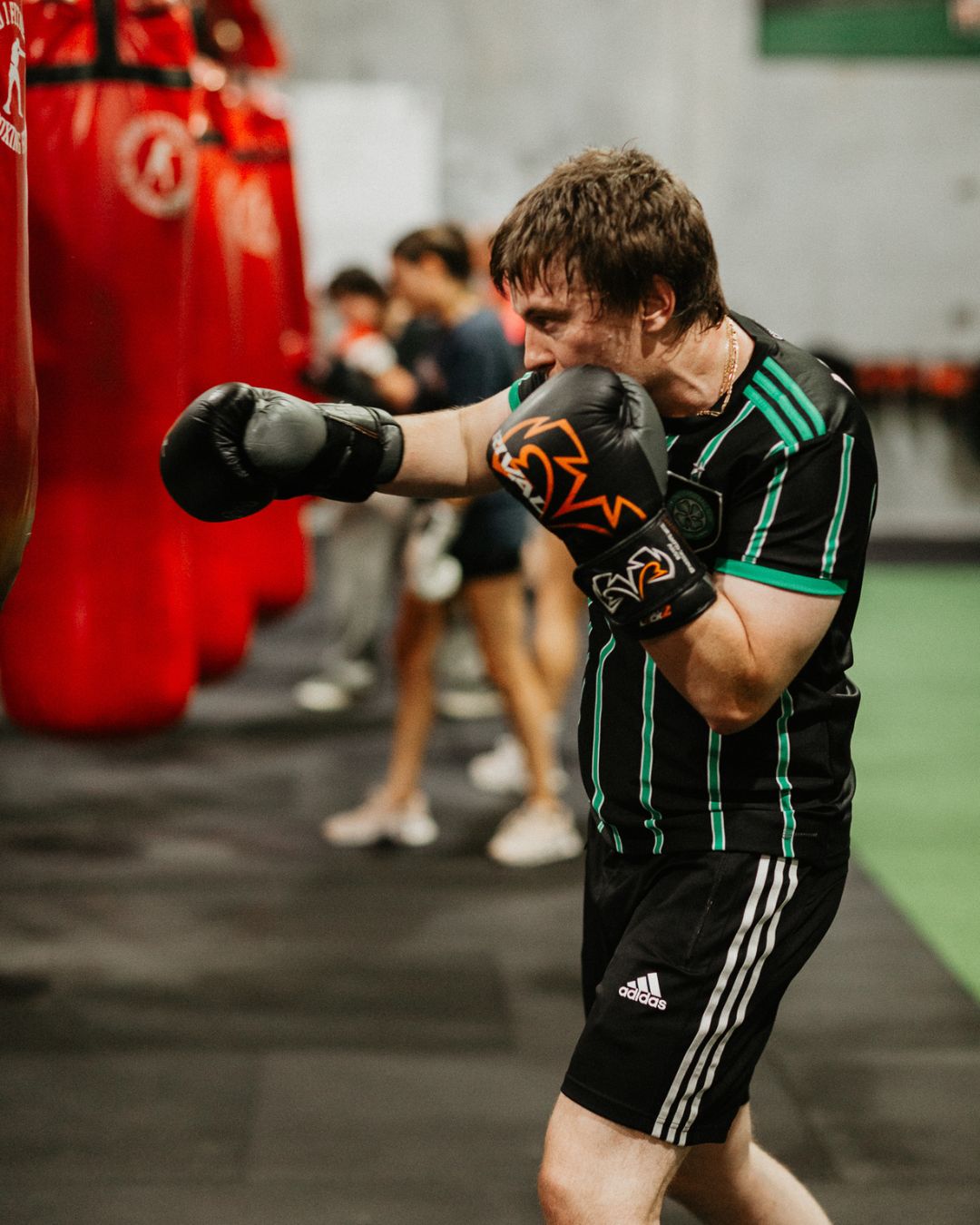
When you're standing in front of a bag, you're not just trying to keep your heart rate at a particular number. You're trying to throw a combination. You're thinking about where your feet are. You're trying to move your head after the cross, get underneath the hook or come back with the right punch after a defensive movement. Even when you're tired, there's something you're trying to accomplish.
That's a really important difference.
If I put someone on a treadmill and tell them to run hard for three minutes, they're very aware that they're running hard for three minutes. There's not much else to think about. Thirty seconds passes. Then another thirty seconds. Eventually you start looking at the clock and wondering how three minutes can possibly contain so many minutes.
A three-minute boxing round can feel completely different. You're working on a combination, the coach changes the instruction, you make a mistake, you try it again, you start getting tired, the combination changes again and suddenly the bell goes.
You haven't somehow avoided the work. You've just had something else to concentrate on while you were doing it.
After coaching boxing classes for a long time, I think that's one of the most underrated things about boxing as a form of exercise. The skill component gives the conditioning somewhere to hide.
People don't necessarily come into a boxing class excited about doing intervals. They come in wanting to box. But within the boxing session they end up doing repeated rounds of relatively hard work, separated by periods of recovery, over and over again. As their boxing improves, they can often work harder because they become more efficient and more confident in what they're doing.
And there is always something else to learn.
Someone starting out might simply be trying to remember their jab-cross-hook. A few months later they're thinking about their foot position. Then they're working on changing levels, adding defensive movements, punching while moving or maintaining their technique when they're tired. The conditioning isn't separate from learning the skill. The two things develop together.
That also gives people another way of measuring progress.
Fitness can sometimes become obsessed with numbers. Weight lost. Calories burned. Kilometres run. Heart rate. Watts. Repetitions. All of those things can be useful, but they're not the only signs that training is working.
Being able to complete a combination that used to completely confuse you is progress. Getting through a round without your hands dropping is progress. Moving naturally instead of having to consciously think about every step is progress. Finishing the final round with the same quality you had in the first round is progress.
And yes, getting fitter is progress as well.
None of this requires a secret training method. In fact, most of the things that make boxing effective are almost comically old-fashioned. Bags, gloves, skipping ropes, pads, bodyweight exercises and a clock on the wall. Work for a period of time, have a short rest and go again.
There's probably a lesson in that beyond boxing.
The fitness industry is forever trying to convince us that somebody has discovered a new shortcut. A new exercise, a new machine, a new protocol, a new heart-rate zone or a new way to achieve in ten minutes what everybody else foolishly spends an hour doing.
Most of the time, the things that actually work aren't nearly as exciting.
Find something you enjoy enough to keep doing. Learn how to do it properly. Work hard at it. Give yourself time to recover. Come back and do it again.
Boxing happens to be a particularly good way of doing exactly that.
So perhaps the mysterious old boxing trainer in the doctor's waiting room was onto something after all.
He just didn't need to reach into his bag and sell us anything.